Keynote Speach UbiSense'26
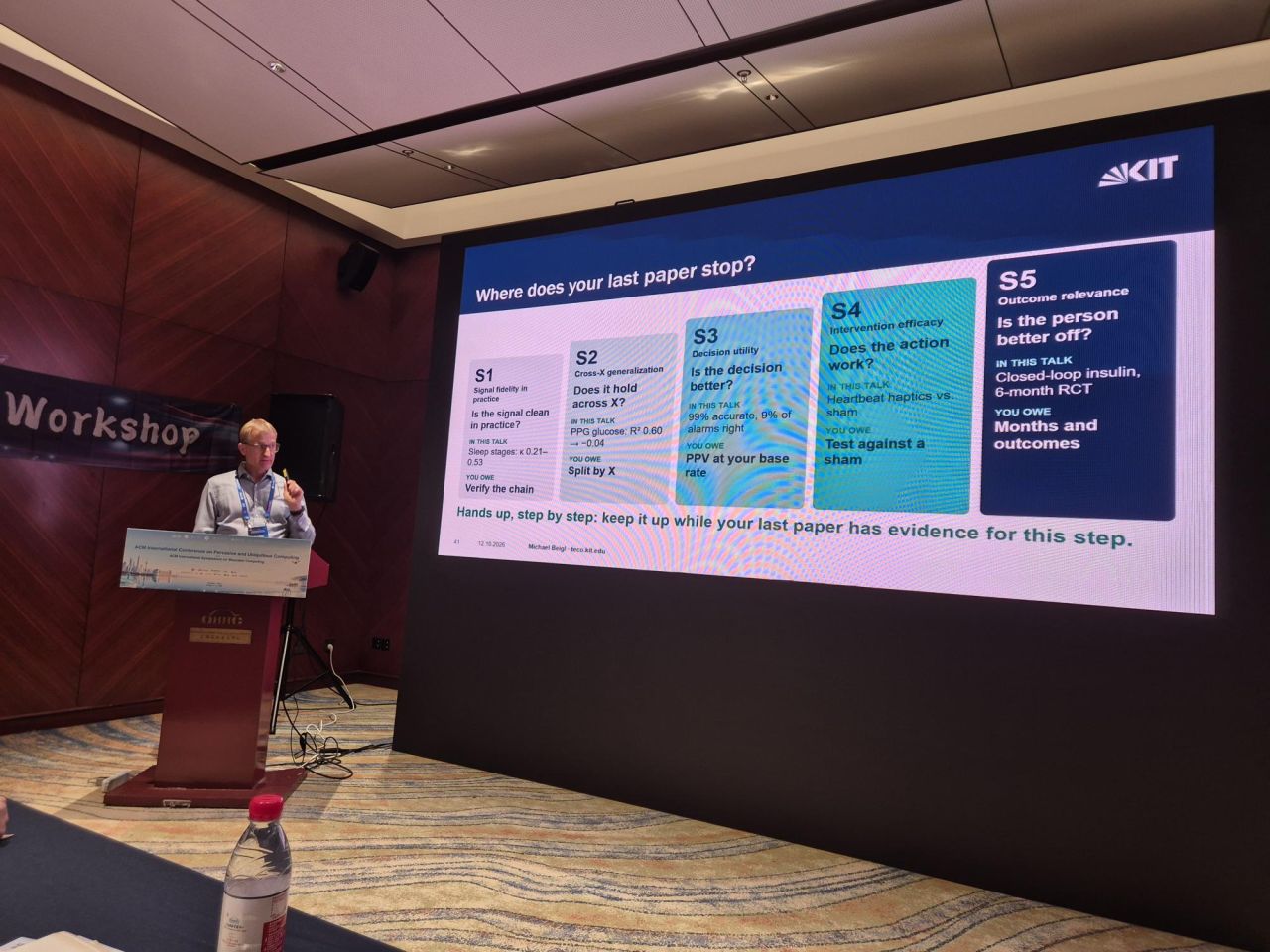
View on LinkedIn99% accurate, and still the wrong decision? Today, I had the pleasure of giving a keynote at the #UbiSense2026 workshop at #UbiComp26 in Shanghai:
𝗙𝗿𝗼𝗺 𝗦𝗲𝗻𝘀𝗶𝗻𝗴 𝘁𝗼 𝗔𝗰𝘁𝗶𝗼𝗻: 𝗘𝘀𝘁𝗮𝗯𝗹𝗶𝘀𝗵𝗶𝗻𝗴 𝗘𝘃𝗶𝗱𝗲𝗻𝗰𝗲 𝗖𝗵𝗮𝗶𝗻𝘀 𝗳𝗼𝗿 𝗧𝗿𝘂𝘀𝘁𝘄𝗼𝗿𝘁𝗵𝘆 𝗖𝗹𝗼𝘀𝗲𝗱-𝗟𝗼𝗼𝗽 𝗪𝗲𝗮𝗿𝗮𝗯𝗹𝗲 𝗖𝗼𝗺𝗽𝘂𝘁𝗲𝗿𝘀
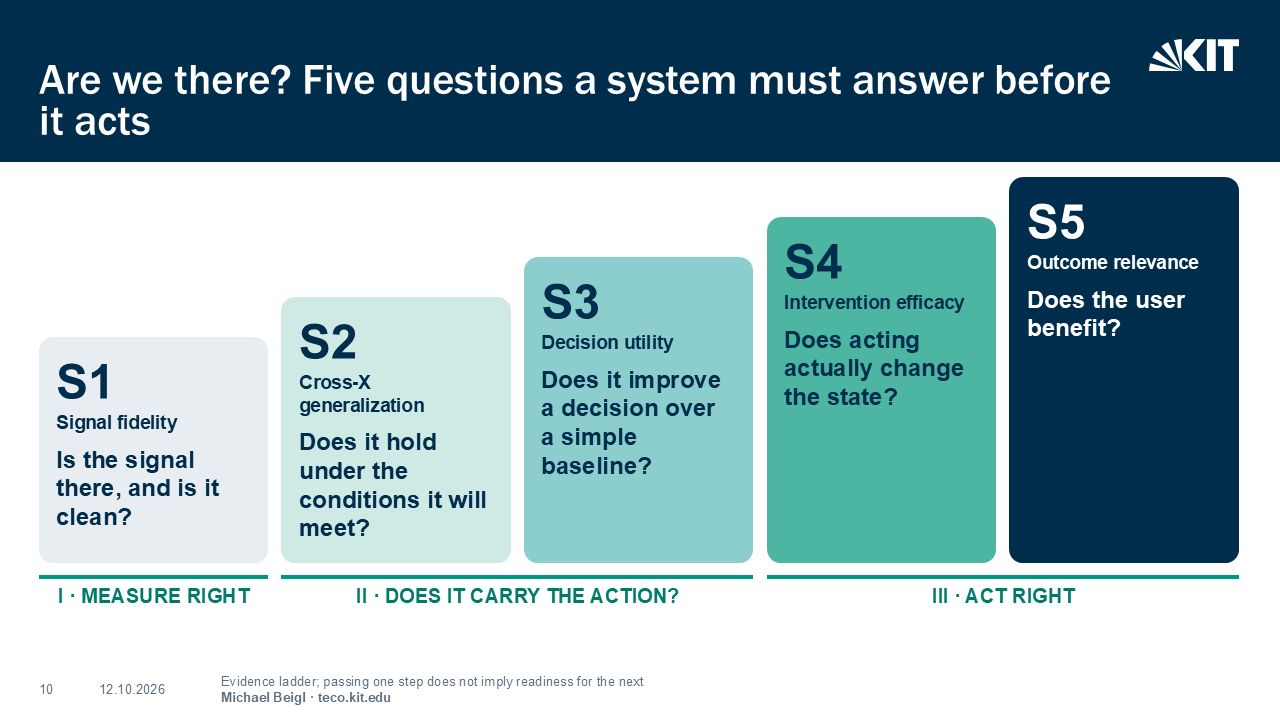
Wearable systems are increasingly moving beyond simply measuring and recognizing our behavior towards making decisions and triggering interventions. But is sensing accuracy alone enough to trust these decisions? A wearable detecting a rare condition with 99% sensitivity and specificity might sound reliable, yet only around 9% of its alarms may actually be correct. In my keynote, I discussed why we need to look beyond technical performance metrics and proposed a five-step evidence ladder, from signal fidelity and generalization to decision utility, intervention efficacy, and actual user benefit. Drawing on examples from our research at #TECO and recent work in wearable sensing, I highlighted why we should not only ask whether our systems measure correctly, but whether their actions really help people. Sometimes, the most important action a wearable can take is none.
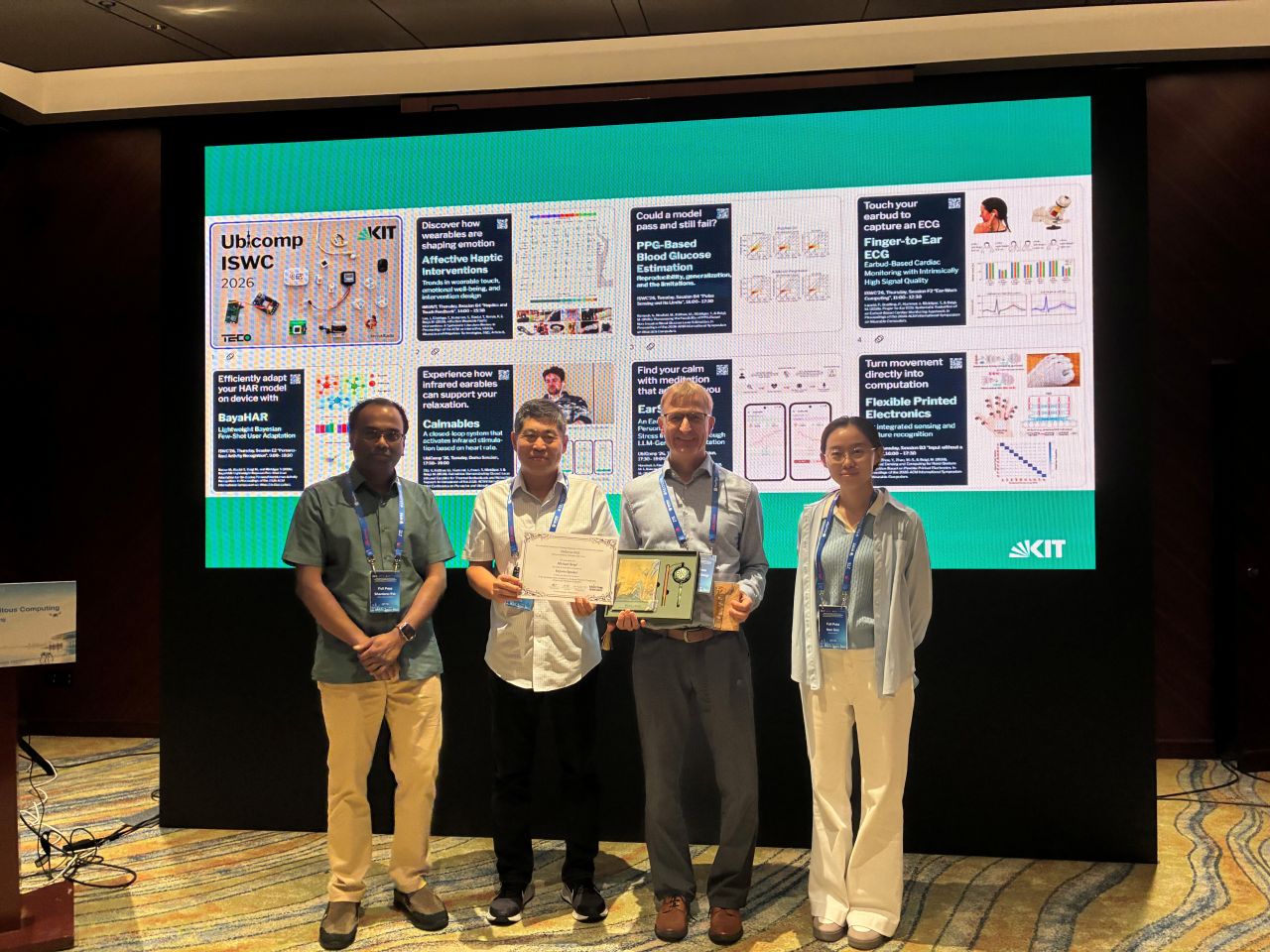
Many thanks to Shantanu Pal, Hao Xue, Nan Gao, Judith H., Flora Salim, and Haining Zhang for organizing #UbiSense2026 and inviting me to contribute! It was a pleasure to share these thoughts and discuss the future of ubiquitous sensing with the community.
#Wearables #UbiquitousComputing #DigitalHealth #WearableSensing #ClosedLoopSystems #ISWC #TECO #KIT